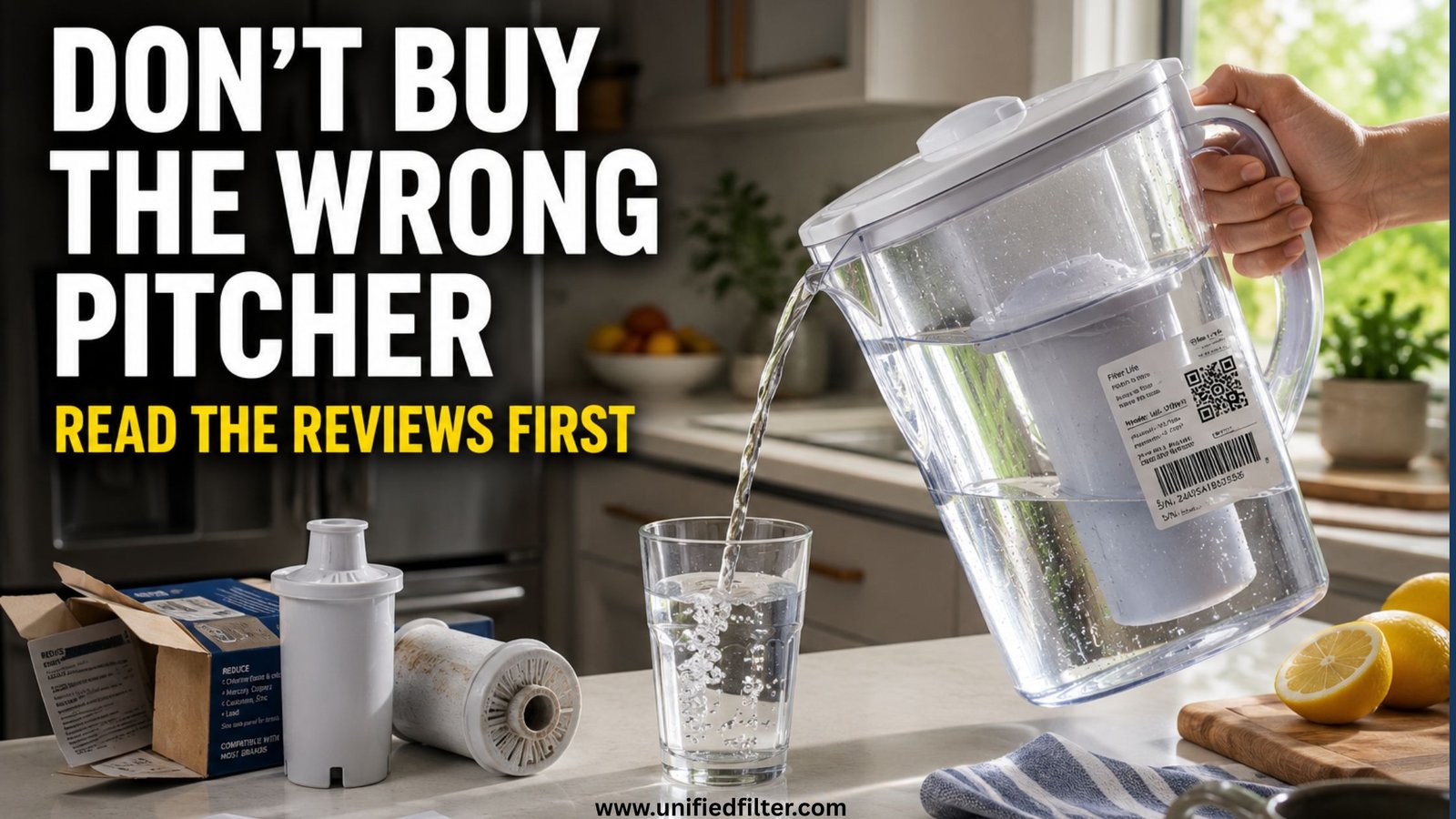

For best value, Brita Elite at ~$32/year, NSF 42/53/401 certified. For PFAS removal, Culligan ZeroWater or Clearly Filtered, both NSF P473 certified. For microplastics specifically, LifeStraw Home is the only pitcher with NSF-244 certification. Brita Standard removes chlorine taste only, not lead.
Water filter pitcher reviews are everywhere, but most of them lead with whichever brand pays the highest affiliate commission. This guide does not work that way. The recommendations below are based on NSF certification data and independent lab testing results, not marketing claims. If a pitcher cannot show a verifiable certification number at nsf.org, it does not make this list.
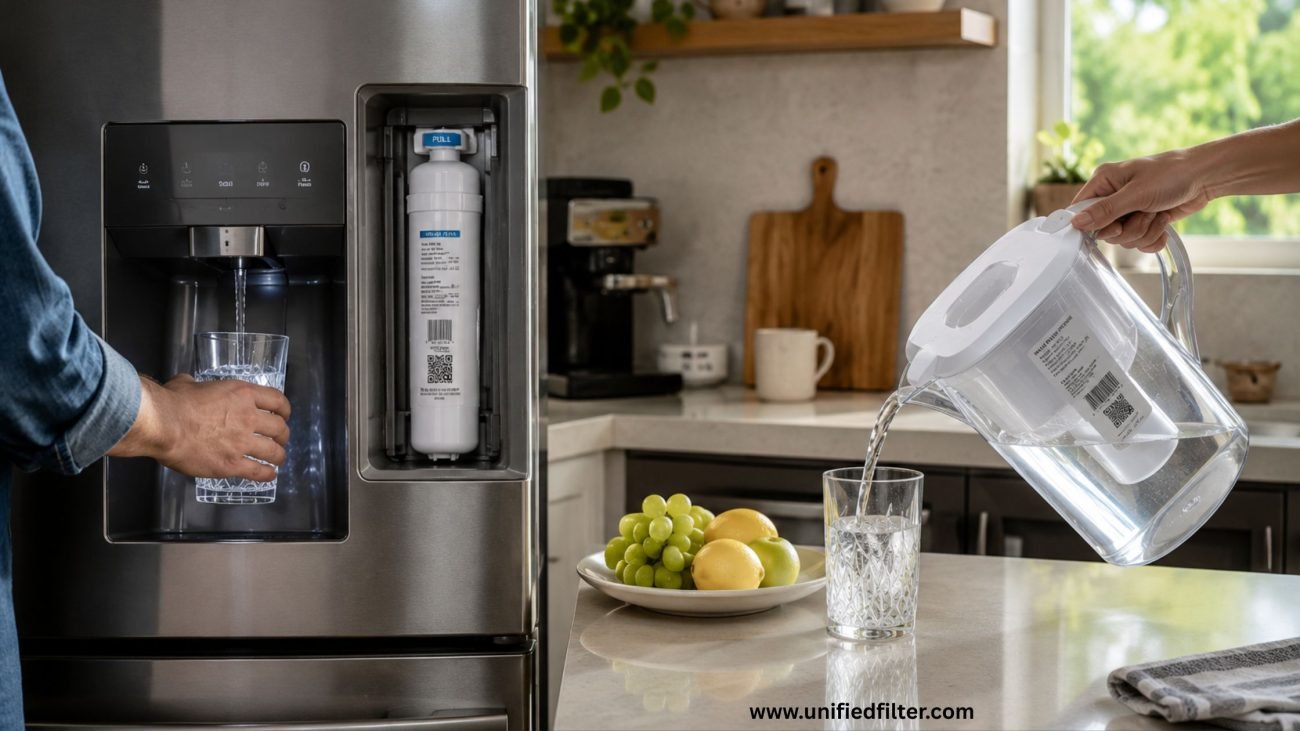
One thing worth knowing is that if you already have a Samsung, Whirlpool, or EveryDrop water filter pitcher fridge dispenser, you may not need a pitcher at all. Your fridge filter already covers chlorine, lead, cysts, and pharmaceuticals for your drinking water and ice. A pitcher adds value mainly if you want filtered water in other parts of the home, or if PFAS is a specific concern.
Water Filter Pitcher Reviews
Every pitcher below holds independent NSF or IAPMO certification. Unverified claims have been excluded. Check any filter’s certification at nsf.org before purchasing, a pitcher that lists certifications without a verifiable number has not been independently tested.
| Pitcher | NSF Certs | PFAS? | Lead? | Filter Life | Annual Cost | Best For |
| Culligan ZeroWater | NSF 42/53/401 + PFAS | Yes | Yes | 40 gal / 2 mo | ~$130/yr | Most comprehensivePFAS + all health contaminants |
| Clearly Filtered | NSF 42/53/401/P473 | Yes | Yes | 100 gal / 4 mo | ~$150/yr | 365+ contaminants, best coverage overall |
| Brita Elite (Longlast+) | NSF 42/53/401 | No | Yes | 120 gal / 6 mo | ~$32/yr | Best value, lead + chlorine, low annual cost |
| Brita Standard | NSF 42 only | No | No | 40 gal / 2 mo | ~$45/yr | Chlorine taste/odor only, budget option |
| LifeStraw Home | NSF 42/53/401/P473/244 | Yes | Yes | 40 gal / 2 mo (carbon) | ~$90/yr | Only pitcher with NSF-244 microplastic certification |
| Epic Pure | NSF 42/53/401 | Partial | Yes | 150 gal / 6 mo | ~$65/yr | Long filter life, good cost per gallon |
A pitcher with only NSF 42 removes chlorine taste, nothing else. NSF 53 adds lead removal. NSF 401 adds pharmaceuticals and emerging contaminants. NSF P473 specifically covers PFAS.
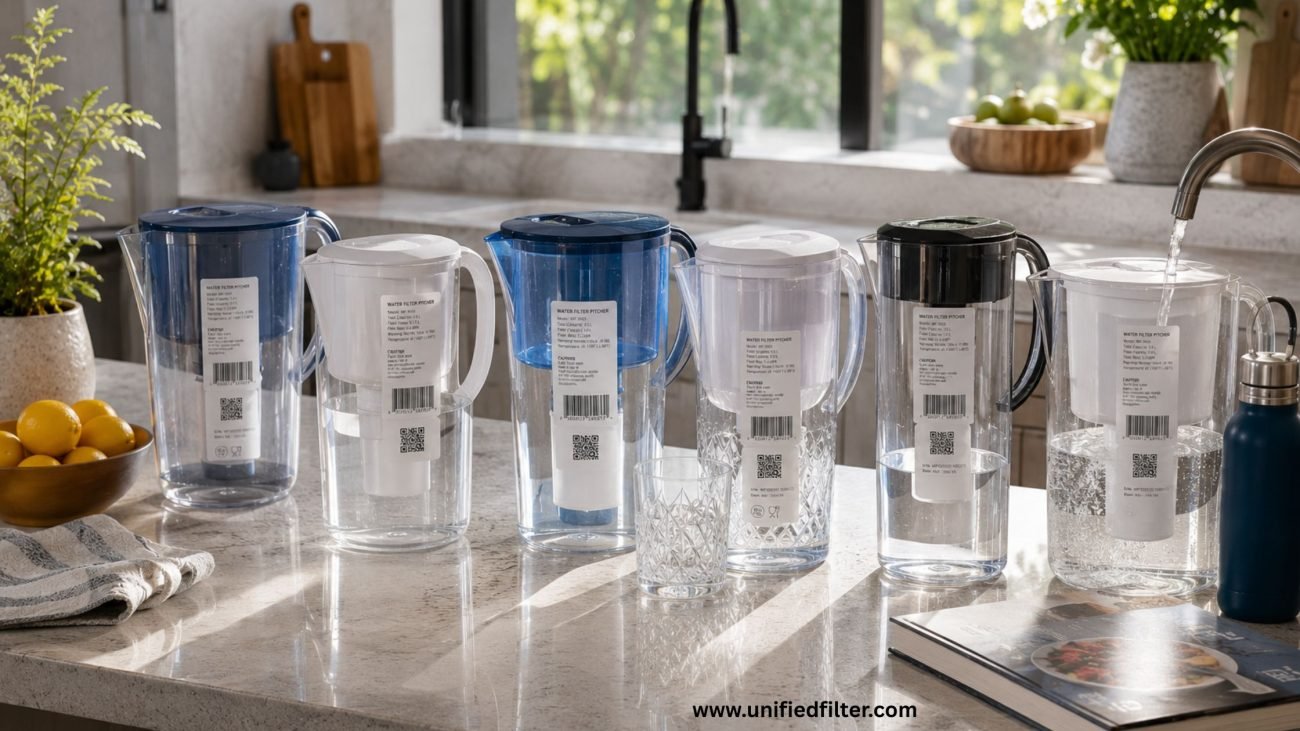
The Brita Standard Filter Problem Most People Do Not Know About
The Brita Standard is the most popular water filter pitcher in the USA. It comes included with most Brita pitchers sold at Target, Walmart, and Amazon. And it is NSF 42 certified only, meaning it reduces chlorine taste and odor. That is it.
If you bought a Brita thinking it removes lead, check which filter is inside. The Standard does not remove lead. Only the Brita Elite (formerly Longlast+) carries NSF 53 certification for lead removal. Many households have been using a Standard filter for years believing they have lead protection when they do not.
Brita renamed the Longlast+ filter to Elite in 2022. If your pitcher uses Longlast+ cartridges, Elite is the current replacement. Same filter, same slot, same NSF 53 certification for lead.
Water Filter Pitcher Cost Compared | Annual Cost Per Gallon
Upfront price is the wrong metric for evaluating water filter pitchers. The real cost is annual filter replacement plus the per-gallon cost. Here is the honest math,
| Filter Option | Upfront Cost | Annual Filter Cost | Cost Per Gallon | Suitable For |
| Brita Standard pitcher | $30-$40 | $45 | $0.28/gal | 1-2 people, taste only |
| Brita Elite pitcher | $35-$45 | $32 | $0.13/gal | Best value pitcher |
| Culligan ZeroWater | $35-$50 | $130 | $0.90/gal | PFAS concern, small household |
| Clearly Filtered | $70-$90 | $150 | $0.55/gal | Maximum coverage |
| EveryDrop OEM fridge filter | Fridge already owned | $90-$110 | $0.25/gal | Fridge + ice best convenience |
| Under sink carbon filter | $80-$200 | $50-$100 | $0.05/gal | Whole kitchen tap |
If you already own a fridge with a water dispenser, the fridge filter is cheaper per gallon than most pitchers and covers the same core contaminants. An under sink carbon filter is dramatically cheaper per gallon than any pitcher, because the cartridges last 6-12 months instead of 2-4 months.
The benefits of pitcher are portability, no installation, and filtered water anywhere in the home. They are also the only option for renters without a fridge dispenser who want affordable basic filtration.
When a Water Filter Pitcher Makes Sense and When It Does Not
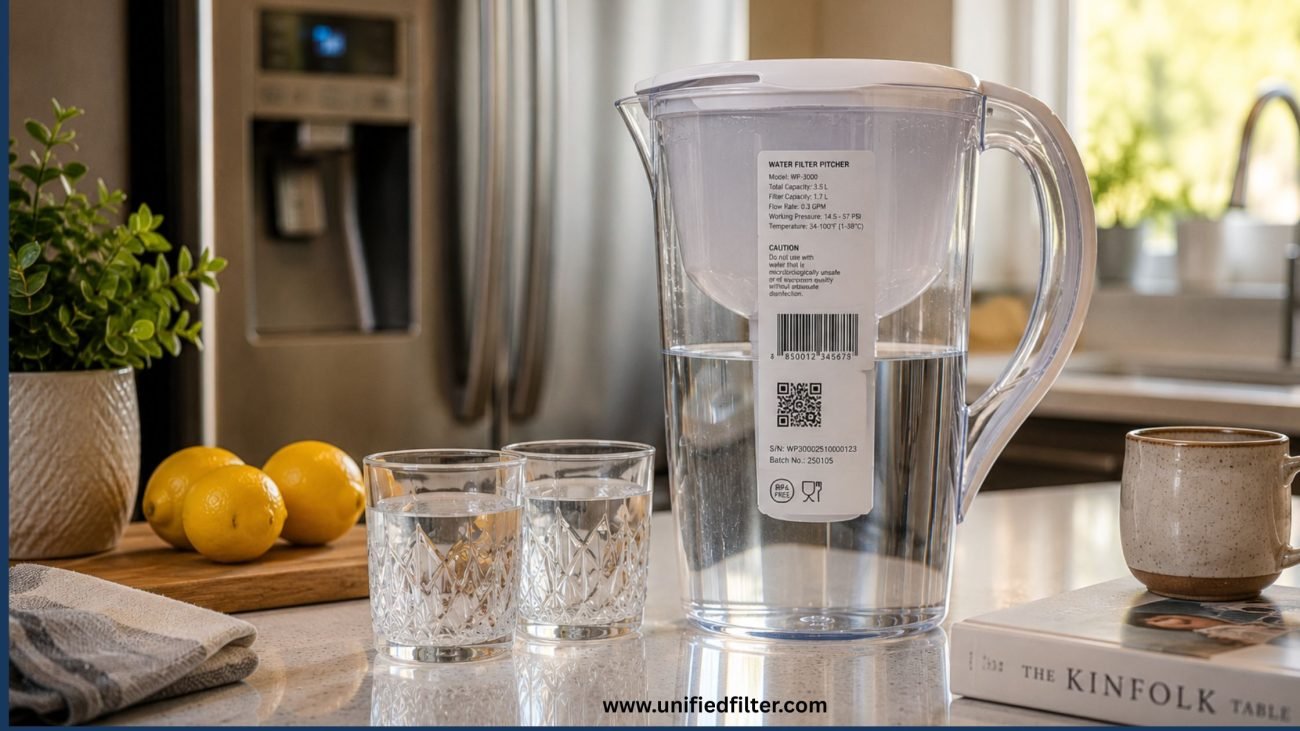
Not every household needs a water filter pitcher. Here is the honest decision guide,
| Pitcher Makes Sense | Pitcher Is Not Enough |
| Renter with no fridge dispenser | PFAS is a documented concern in your supply |
| 1-2 person household, low water use | You need fluoride or nitrate removal |
| Want filtered water in multiple rooms | High-usage household, pitcher refilling becomes tiresome |
| Budget under $50/year for filtration | You already have a fridge filter, adds minimal benefit |
| Backup filter during travel or emergencies | Lead pipes in an older home, under sink RO more effective |
If you own a Samsung or EveryDrop fridge filter, the pitcher adds the most value for filtered water in rooms other than the kitchen, or if PFAS is a specific concern. For general drinking water in the kitchen, your fridge filter is already doing the job.
Also check: How Often to Change Fridge Water Filter
What to Look for When Buying a Water Filter Pitcher
Three things that actually matter, ignore the rest of the marketing,
1. NSF certification number, not just a logo. Search the brand and model at nsf.org. If it does not appear, the certification claim is unverified. Logos and badges on packaging mean nothing without a verifiable certification number.
2. Filter life in gallons, not months. Month estimates assume average household usage. A 2-month filter for a couple might last 4 months. A 2-month filter for a family of 5 might last 6 weeks. Gallon capacity is the honest metric, divide the price by the gallon capacity to get true cost per gallon.
3. Capacity vs your actual usage. A 6-cup pitcher needs refilling multiple times a day for a family. A 10-cup pitcher reduces this significantly. The frustration of constant refilling is the most common reason people abandon pitchers, buy larger than you think you need.
Pitcher filters need to be stored cold to slow bacterial growth inside the filter media. A pitcher left at room temperature for more than a few days can develop biofilm in the cartridge. Keep it in the fridge whenever not in use.
Frequently Asked Questions
Which water filter pitcher removes the most contaminants?
Clearly Filtered removes 365+ contaminants and holds NSF 42/53/401/P473 certification. Culligan ZeroWater removed 100% of all health-related contaminants in independent lab testing.
Does Brita remove lead?
Only with the Brita Elite filter, NSF 53 certified for lead. The Brita Standard filter removes chlorine taste and odor only, not lead.
Which water filter pitcher removes PFAS?
Culligan ZeroWater, Clearly Filtered, and LifeStraw Home are all certified for PFAS removal. LifeStraw Home also holds NSF-244 for microplastics.
How often should I replace a water filter pitcher cartridge?
Brita Standard and ZeroWater every 40 gallons (about 2 months). Brita Elite every 120 gallons (about 6 months). Clearly Filtered every 100 gallons. Epic Pure every 150 gallons.
Do I need a water filter pitcher if I have a fridge filter?
Not for kitchen drinking water, your fridge filter covers the same contaminants. A pitcher adds value if you want filtered water in other rooms or if PFAS is a specific concern.