Water Filter for Lead | Which Filters Are Actually Certified and Which Are Not

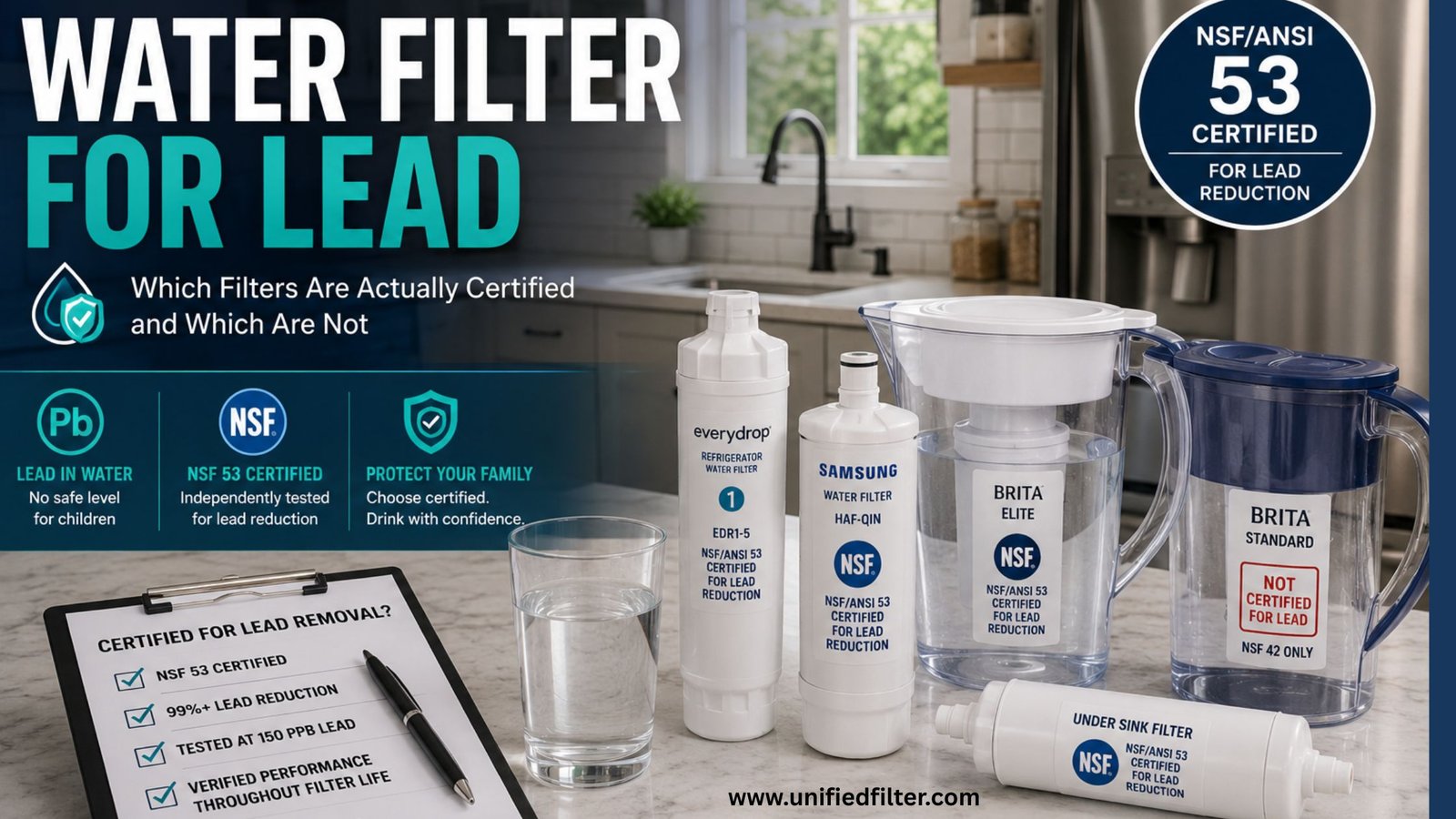
Any water filter certified to NSF 53 for lead removes 99%+ of lead. This includes genuine EveryDrop and Samsung fridge filters, Brita Elite pitcher, ZeroWater, Clearly Filtered, and NSF 53 certified under sink filters. The Brita Standard pitcher is NOT certified for lead. NSF 42 alone does not cover lead. Always verify the specific NSF 53 certification at nsf.org.
Lead in drinking water is a health issue with no safe exposure level, particularly for children under 6, where it affects brain development, and pregnant women. The EPA’s action level is 15 parts per billion, but health agencies including the CDC state that no level of lead is considered safe for children.
The good news is a certified water filter for lead removes 99%+ of lead from your drinking water. The challenge: many popular filters are not certified for lead removal despite being widely used and trusted. This guide tells you exactly which filters are certified, which are not, and how to verify before you buy.
Where Does Lead Come From in Tap Water?
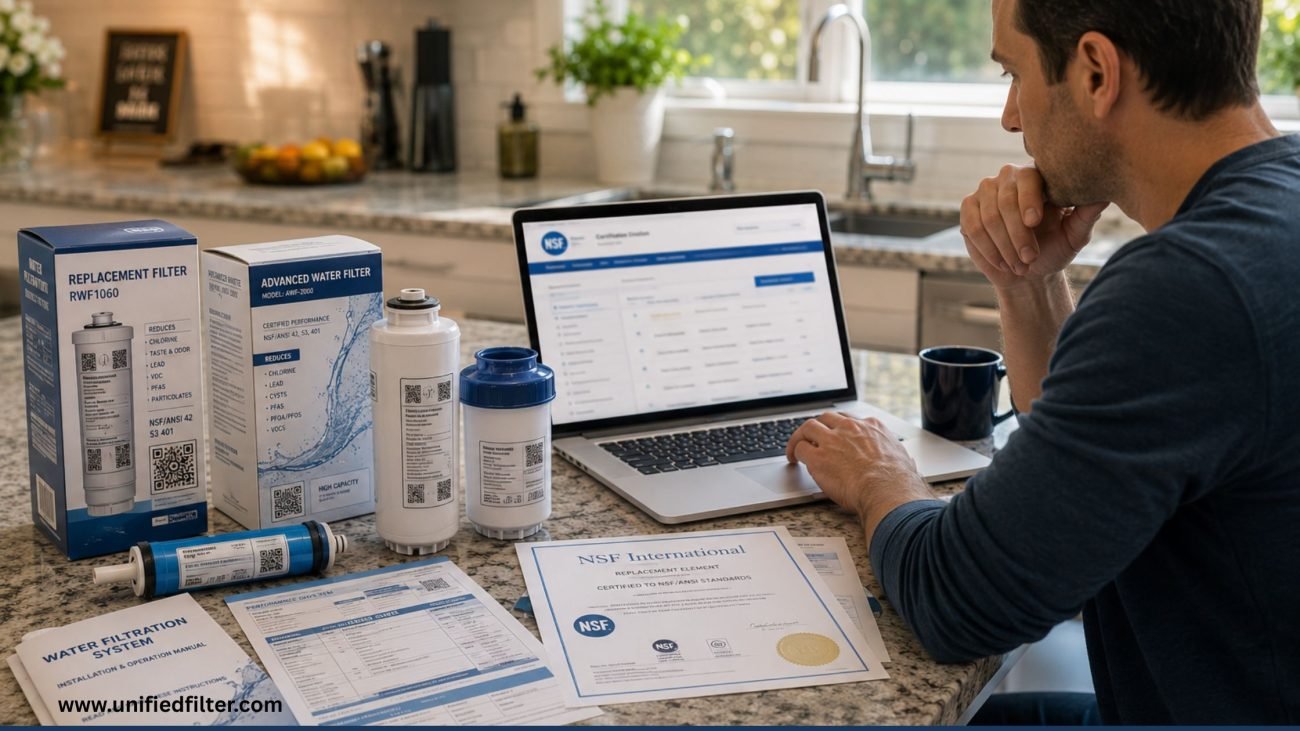
Lead does not come from the source water or treatment facility. It enters your water after it leaves the treatment plant, from the pipes, solder, and fixtures in your home and the service lines connecting your home to the main. Choosing a certified water filter for lead helps reduce this contamination before it reaches your drinking glass.
The main sources of lead in drinking water,
- Lead service lines, pipes connecting the main to your home, common in cities built before 1950
- Lead solder, used to join copper pipes, allowed until 1986 in the US
- Brass fixtures, faucets and valves made before 2014 could contain up to 8% lead
- Lead-lined pipes in older buildings, apartments, schools, and offices built pre-1960
This is why boiling water does not remove lead. Boiling kills bacteria, it does not affect dissolved minerals. In fact, boiling concentrates lead as water evaporates. Only certified filtration removes it.
The only way to know if you have lead in your water is to test it. The EWG Tap Water Database shows documented lead detection in your local system, but does not account for lead in your specific home plumbing. A professional water test from SimpleLab or National Testing Laboratories is the most accurate option.
NSF 53 Certification | The Only Lead Filter Certification That Matters
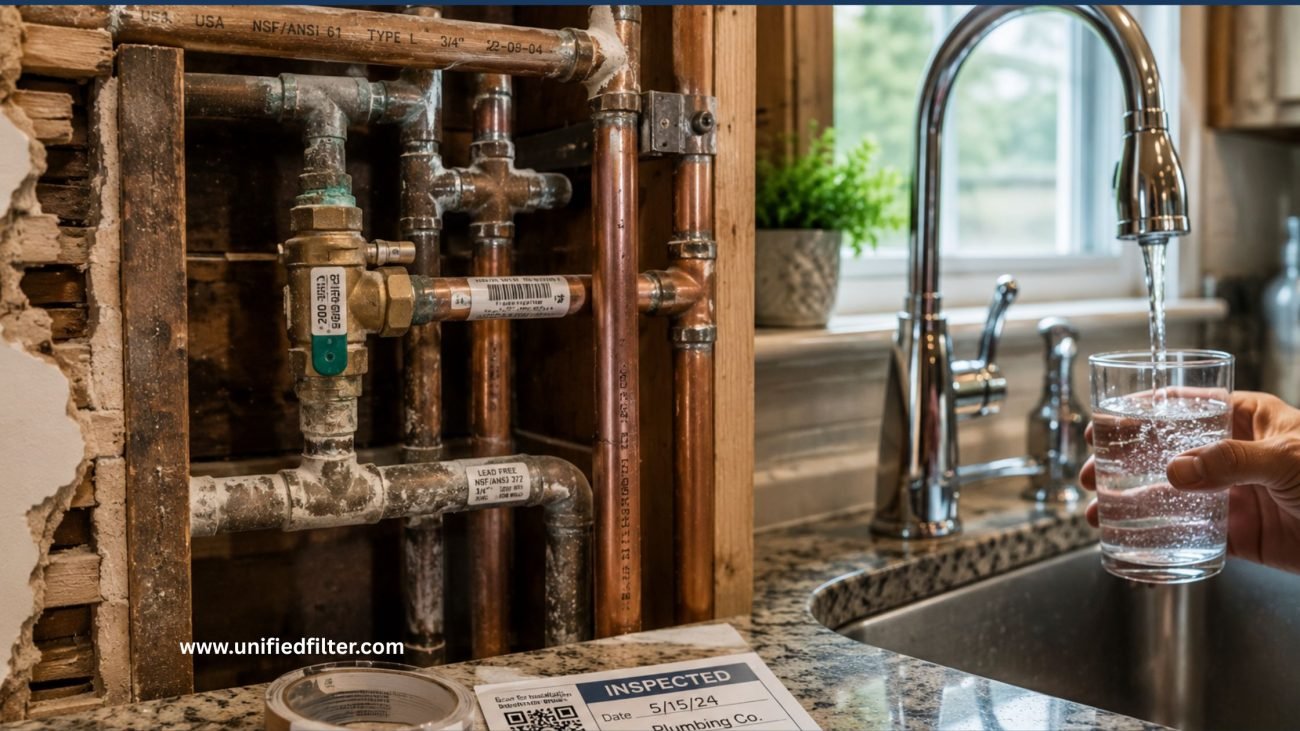
When shopping for a water filter for lead, one certification matters above all others, NSF/ANSI 53. This standard specifically covers health-related contaminant reduction, and lead is one of the primary contaminants tested.
What NSF 53 certification for lead actually means
The filter has been independently tested at 150 ppb lead, ten times higher than the EPA’s action level, and verified to reduce lead to below EPA maximum levels throughout the entire rated filter life. This is not a one-time test at the beginning of filter life. NSF tests at the filter’s claimed end of life to ensure performance is maintained throughout.
NSF 42 alone is not enough. NSF 42 covers aesthetic contaminants, chlorine taste, odor, and particulate matter. It does not cover lead. A filter with only NSF 42 certification has not been tested for lead reduction. Always look for NSF 53 specifically, with lead listed on the certification.
Not all filters that say NSF 53 are actually certified for lead specifically. NSF 53 covers multiple contaminants, a filter can be NSF 53 certified for cysts but not lead. Verify at nsf.org by searching the brand and checking that lead appears in the certified contaminants list.
Water Filter for Lead | Certified Options Compared
Here is every major filter type with their actual lead certification status,
| Filter Type | NSF 53 Lead? | % Removal | Installation | Annual Cost | Best For |
| Fridge filter (EveryDrop OEM) | Yes | 99%+ | None | $90-$110 | Fridge water + ice |
| Fridge filter (Samsung HAF-QIN) | Yes | 99%+ | None | $90-$110 | Fridge water + ice |
| Brita Elite pitcher | Yes | 99% | None | $32/yr | Budget, kitchen only |
| Brita Standard pitcher | No | Not certified | None | $45/yr | Chlorine taste only, NOT lead |
| ZeroWater pitcher | Yes | 99.7% | None | $130/yr | Budget + PFAS coverage |
| Under sink carbon (NSF 53) | Yes | 99%+ | DIY, 30 min | $50-$100/yr | Whole kitchen tap |
| Under sink RO | Yes | 99.9%+ | DIY, 60-90 min | $100-$200/yr | Lead + PFAS + fluoride |
| Whole house lead filter | Yes | 99.95%+ | Plumber needed | $200-$400/yr | Every tap, high lead risk home |
If you have a genuine EveryDrop OEM filter (EDR1-5) or Samsung HAF-QIN (DA97-17376B) or HAF-CIN (DA29-00020B), these are all NSF 53 certified for lead. Your fridge filter is already protecting you at the dispenser and ice. Where it falls short: it does not cover water from other taps in your home.
Soluble vs Particulate Lead | Why Your Water Filter for Lead Type Matters
Lead in water comes in two forms, and not every certified filter removes both effectively,
Dissolved (soluble) lead: Lead ions dissolved in the water at the molecular level. This is the most common form and comes primarily from corroding pipes and solder. Carbon block filters remove soluble lead through adsorption. RO removes it through the membrane.
Particulate lead: Tiny solid lead particles from pipe corrosion and deteriorating fixtures. These are larger particles that can be mechanically trapped by fine-pore filters. A 0.5 micron carbon block filter removes particulate lead effectively. RO also removes it.
NSF 53 certified filters are tested at both forms. A filter with genuine NSF 53 certification for lead removes both dissolved and particulate forms. This is one more reason why verifying NSF 53 certification is essential, unverified filters may remove visible particles but miss the dissolved lead that causes the majority of exposure.
How to Assess Your Lead Risk at Home
Not everyone faces the same lead risk. Here is a practical guide to assess whether a water filter for lead is essential, advisable, or precautionary for your situation:
| Risk Factor | Lead Risk Level | Recommended Action |
| Home built before 1986 | High, lead pipes and solder likely | Test water, use NSF 53 certified filter at all drinking taps |
| Home built 1986-2011 | Medium, lead-free solder still allowed at trace levels | Check with local utility, use NSF 53 certified filter as precaution |
| Home built after 2014 | Lower, stricter standards apply | Standard NSF 53 fridge or pitcher filter sufficient |
| City with known lead service lines | High, even new homes at risk from mains | Check EWG tap water database, consider whole house filter |
| Children under 6 or pregnant women in home | Extra caution regardless of home age | NSF 53 filter essential — no safe level of lead for children |
If you live in a home built before 1986 and have not tested your water, test it. A basic lead water test costs $20-$40 from SimpleLab or your local hardware store. If lead is detected above 5 ppb, use NSF 53 certified filters at all taps you drink from.
Also read : Water Filter Pitcher Reviews | Which One Is Worth Buying in 2026
Why You Must Replace Lead Filters on Schedule
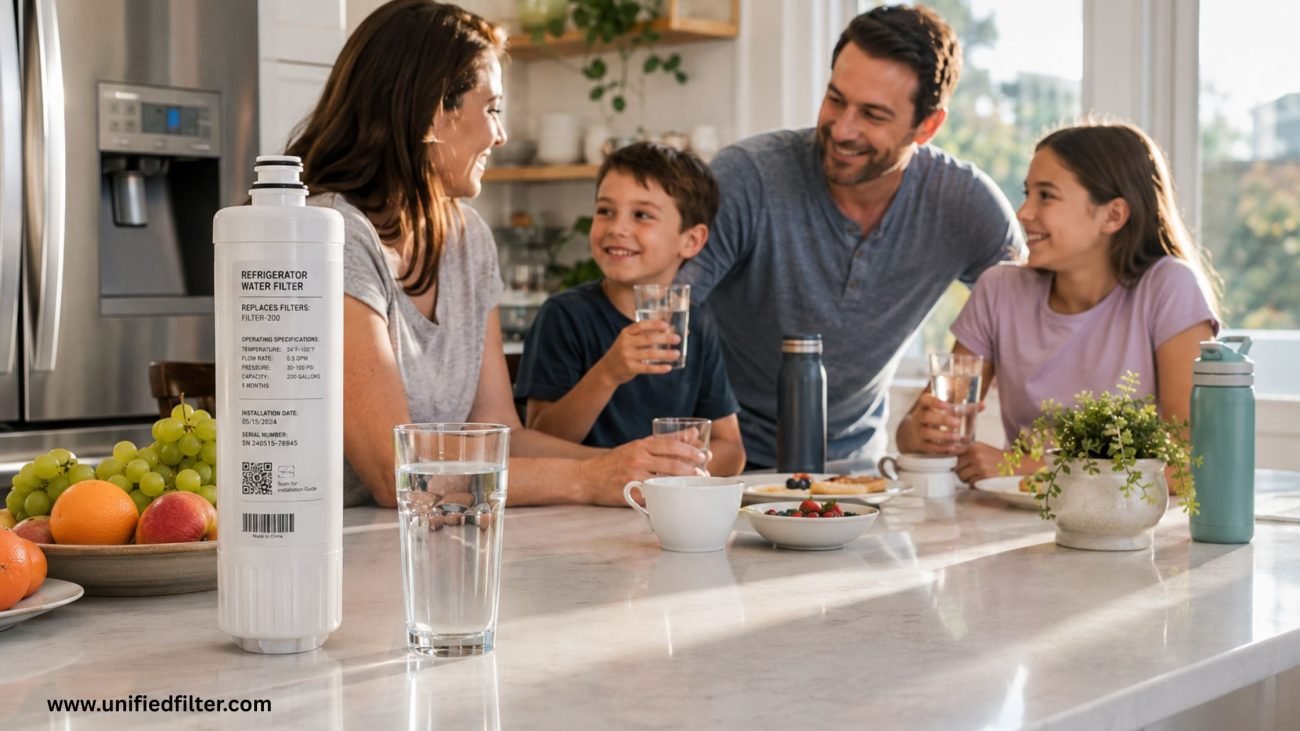
Choosing the right water filter for lead means nothing if it is overdue for replacement. Consumer Reports’ 2026 testing found that several popular pitchers removed less than 50% of lead by the end of their rated filter life, despite removing close to 99% at the beginning. Filter performance for lead declines as the carbon becomes saturated.
This means that a filter that is overdue for replacement may be providing almost no lead protection, even if it still removes chlorine and the water looks and tastes fine. Lead has no taste, color, or odor.
- Fridge filters, replace every 6 months or 200-300 gallons. Do not wait for the red light.
- Brita Elite pitcher, replace every 120 gallons (about 6 months) not every 2 months like the Standard.
- Under sink filters, replace on the manufacturer’s schedule, typically every 6-12 months.
- Never try to extend a filter beyond its rated capacity when lead is a concern.
FAQs
What is the best water filter for lead removal?
Any filter with NSF 53 certification for lead removes 99%+ of lead. RO systems, Clearly Filtered, ZeroWater, Brita Elite, and genuine fridge filters (EveryDrop, Samsung) are all certified options.
Does the Brita Standard filter remove lead?
No, the Brita Standard is NSF 42 certified only, which covers chlorine taste and odor. Only the Brita Elite (formerly Longlast+) is NSF 53 certified for lead removal.
Does boiling water remove lead?
No, boiling kills bacteria but does not remove dissolved minerals including lead. Boiling actually concentrates lead as water evaporates.
Does my fridge filter remove lead?
Genuine EveryDrop OEM filters (EDR1-5) and Samsung OEM filters (HAF-QIN, HAF-CIN) are NSF 53 certified for lead. Generic compatible filters may not be, check the certification.
How do I know if I have lead in my tap water?
Test your water, order a certified lead test from SimpleLab or check ewg.org/tapwater for your local supply’s documented lead detection history.