
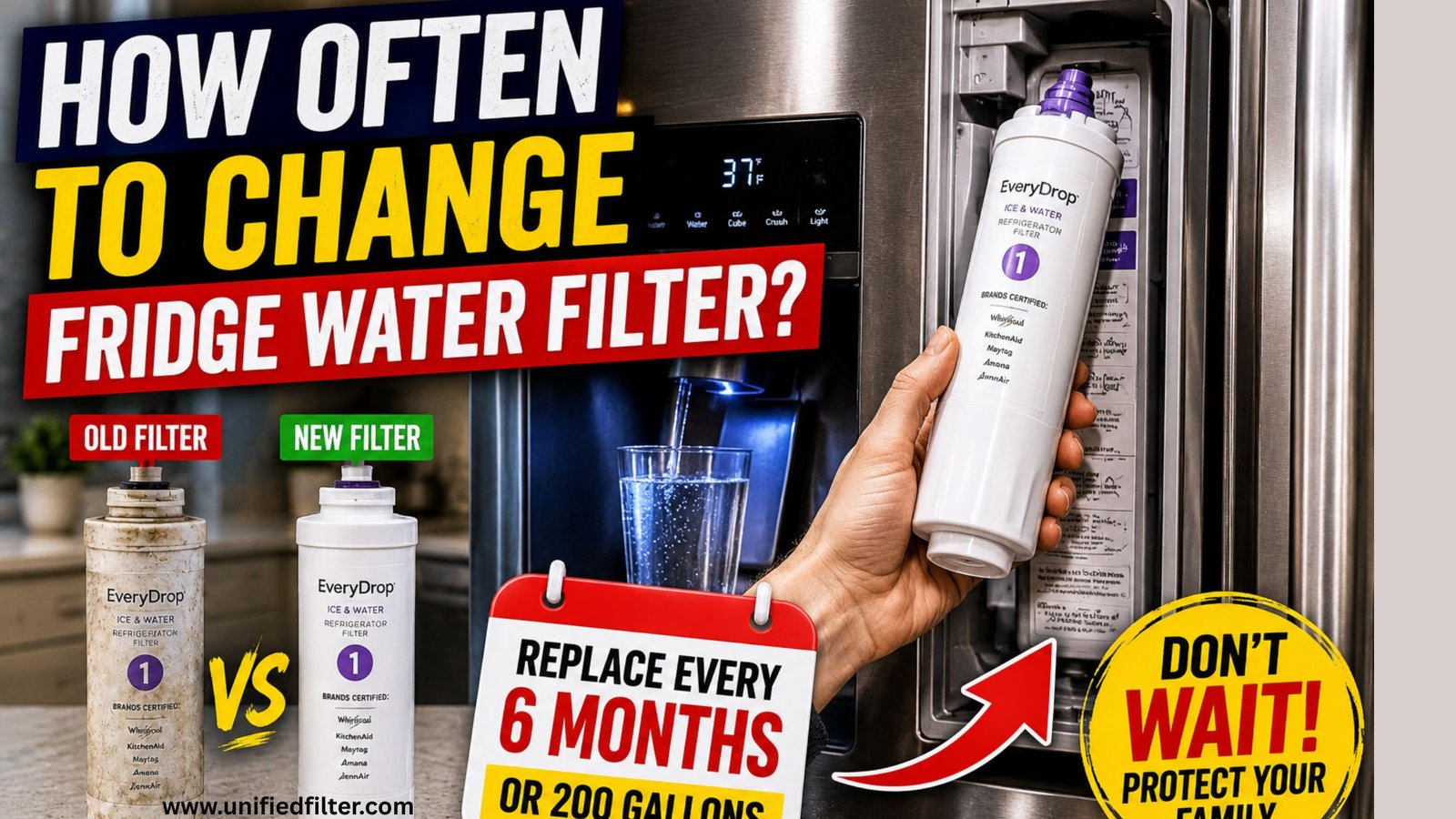

Replace your fridge water filter every 6 months or when you hit the gallon limit, whichever comes first. EveryDrop filters are rated for 200 gallons. Samsung filters for 300 gallons. Heavy-use households (5+ people) may hit the gallon limit in 3-4 months. Do not exceed 6 months regardless of usage, wet carbon filters can grow bacteria over time.
How often to change fridge water filters is one of the most searched refrigerator questions and the honest answer is not always “every 6 months.” That is the standard, but the right schedule for your household depends on how many people use the dispenser, your water quality, and which brand of filter you have.
Most people either change too late (the indicator has been red for months) or follow the timer blindly without considering that a family of six burns through a 200-gallon filter in 10 weeks. This guide gives you the actual schedule for your situation, not just the manufacturer’s default.
How Often to Change Fridge Water Filter | 6 Months or Gallons?
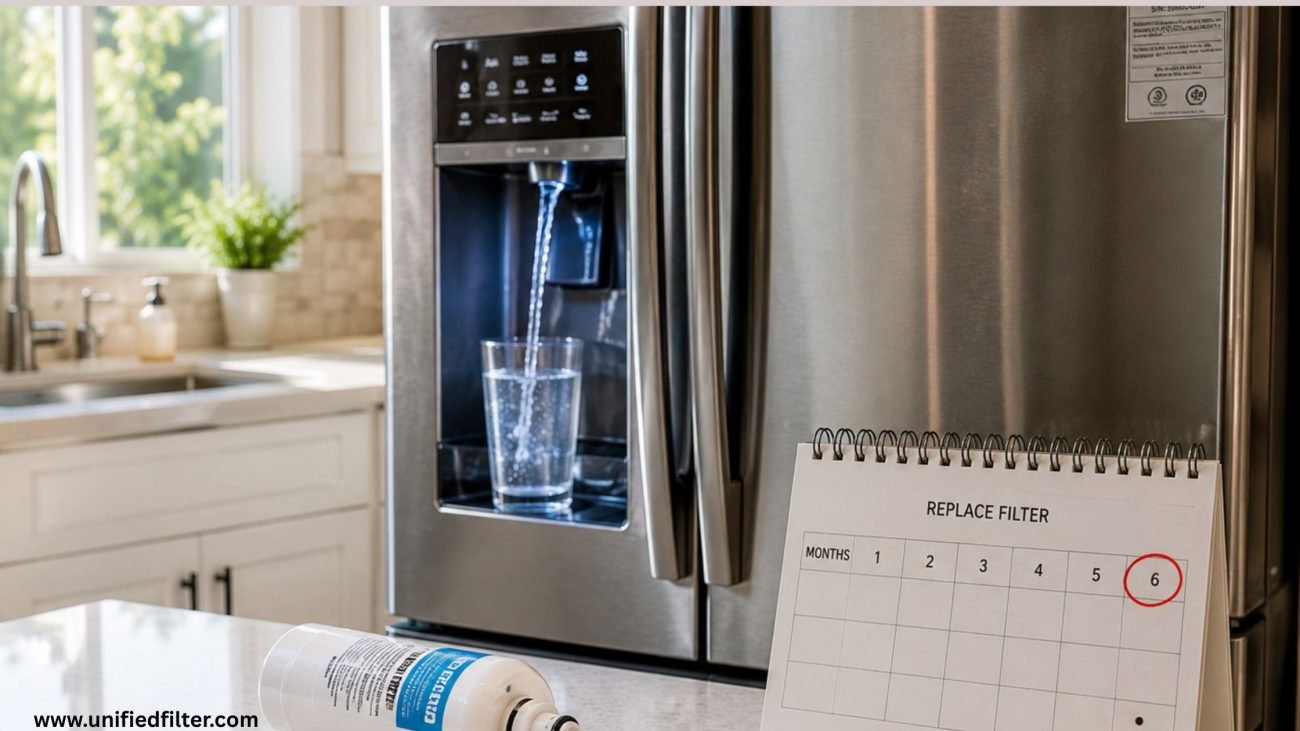
Every fridge filter has two limits, a time limit (usually 6 months) and a gallon limit (200-300 gallons depending on the brand). The rule is simple, replace whichever limit comes first.
Why gallons matter more than months for busy households.
A family of 5-6 using the dispenser heavily can go through 200 gallons in 10-12 weeks, long before the 6-month timer triggers. The indicator light stays green, the water tastes fine, but the filter has been overloaded for weeks. Saturated carbon does not just stop filtering, it can release previously trapped contaminants back into your water.
Why months matter for light users.
A single person or couple using the dispenser occasionally may never hit the gallon limit in 6 months. But carbon filters sitting wet develop biofilm over time regardless of usage. Six months is the maximum regardless of how little you use the dispenser.
The 6-month rule is a ceiling, not a target. For heavy-use households, the real schedule is shorter. For very light users, 6 months is still the maximum, never extending beyond it.
How Often to Change Fridge Water Filter | By Household Size
The honest schedule depends on how many people use the fridge dispenser and ice maker. Use this table to find your realistic replacement interval,
| Household Type | Daily Usage | Replace Every | Annual Filters |
| 1-2 people, light use | 1-3 glasses + small ice tray | 6 months | 2 filters/year |
| 3-4 people, moderate use | 4-8 glasses + ice daily | 5-6 months | 2-3 filters/year |
| 5+ people, heavy use | 8+ glasses + heavy ice use | 3-4 months | 3-4 filters/year |
| Well water or hard water area | Any | 3-4 months | 3-4 filters/year |
| City water, small household | 1-2 glasses only | 6 months max, do not exceed | 2 filters/year minimum |
A standard fridge dispenser delivers about 1 gallon per 8-10 glasses of water. A family of 4 drinking 2 glasses each per day uses roughly 0.8-1 gallon daily, hitting a 200-gallon EveryDrop filter limit in about 6-7 months. For a family of 6 drinking more heavily, that same filter runs out in 4 months.
Fridge Filter Replacement Schedule by Brand
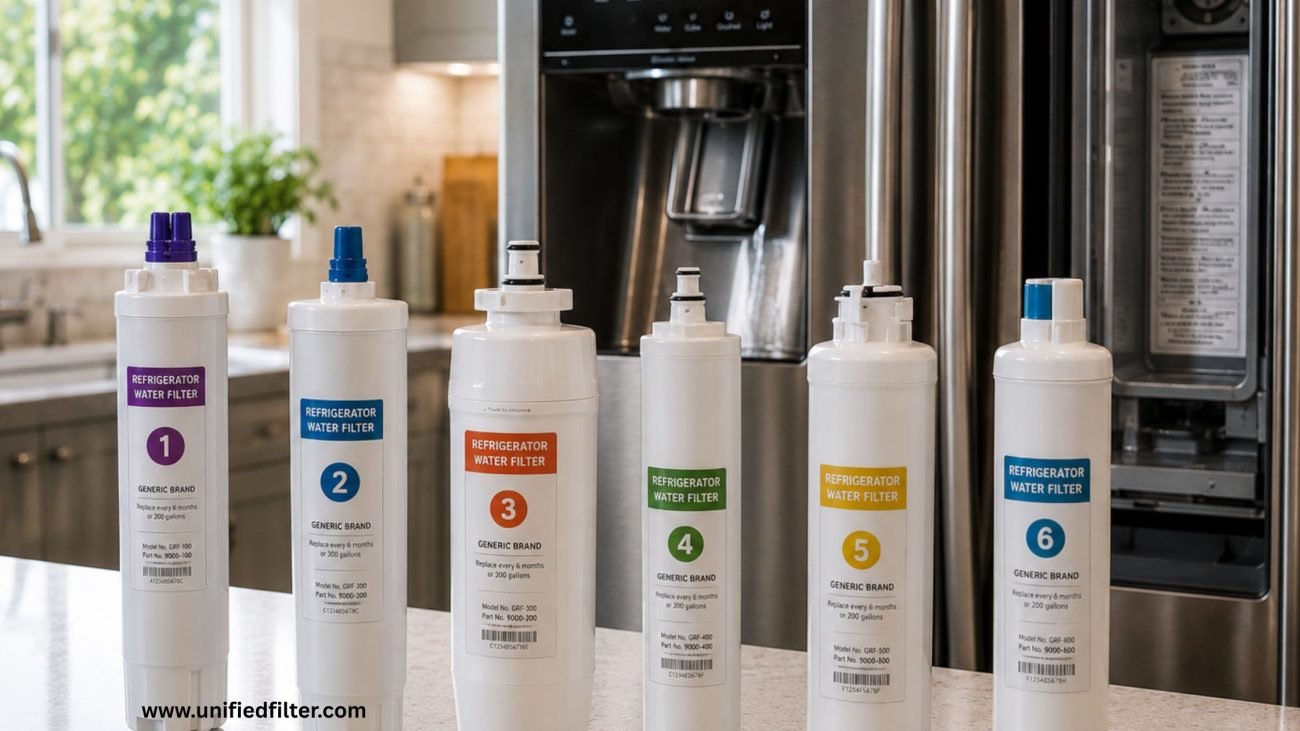
Official replacement schedules by brand, note the gallon difference between EveryDrop (200 gallons) and Samsung (300 gallons)
| Brand / Filter | Official Schedule | Gallon Rating | Filter Model |
| EveryDrop (Whirlpool/KitchenAid/Maytag) | Every 6 months | 200 gallons | EDR1-5 series |
| Samsung HAF-QIN | Every 6 months | 300 gallons | DA97-17376B |
| Samsung HAF-CIN | Every 6 months | 300 gallons | DA29-00020B |
| LG LT1000P / LT700P | Every 6 months | 200 gallons | LT1000P / LT700P |
| Frigidaire / Westinghouse | Every 6 months | 200 gallons | WFCB / WF2CB / WF1CB |
| GE XWFE / MWF | Every 6 months | 170-300 gallons | XWFE / MWF |
Samsung filters last 50% longer in gallons than EveryDrop, 300 vs 200 gallons. For a family of 4 using about 1 gallon daily, a Samsung filter lasts about 10 months on gallons, but you still replace at 6 months because of the time limit. For the same family with an EveryDrop filter, gallons run out at around 6-7 months,roughly aligned with the time limit.
The Filter Indicator Light | What It Actually Tracks
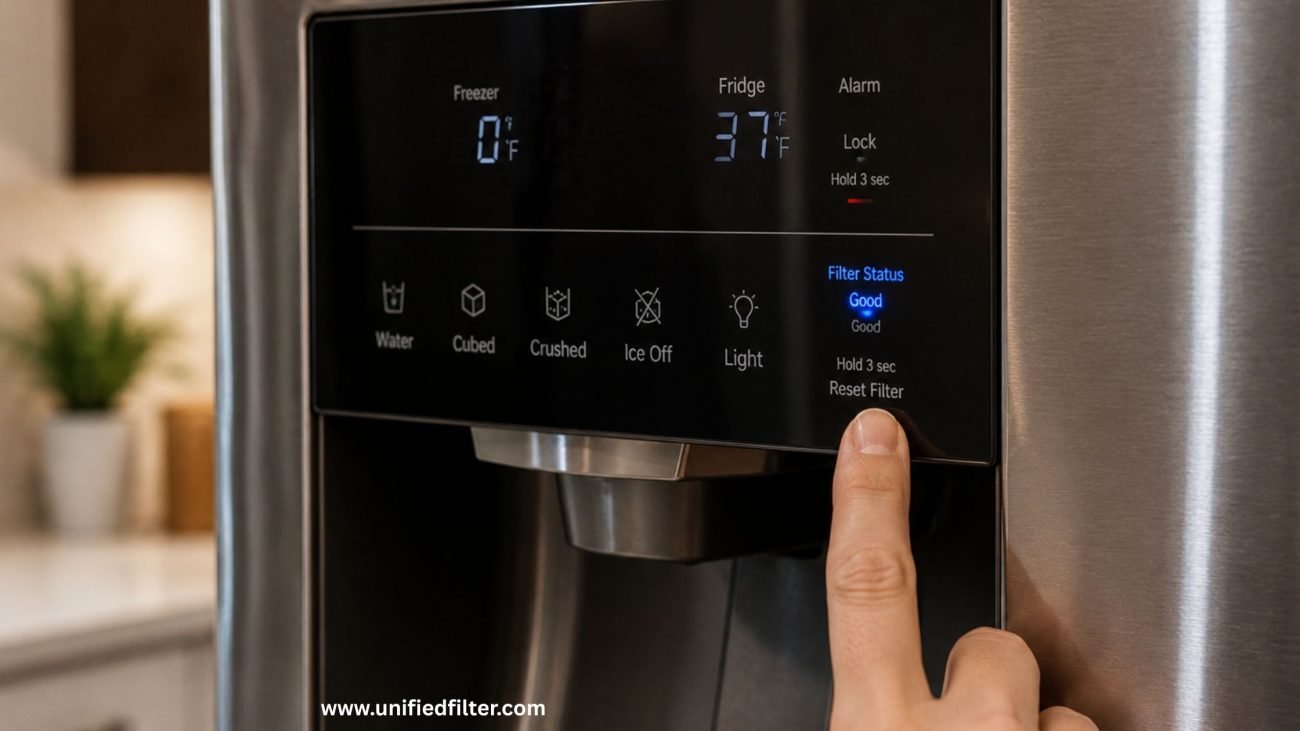
Most fridge filter indicator lights are timer-based, not usage-based. They count down from 6 months regardless of how much water you have used. A household of 6 with a green indicator light may have a filter that hit its gallon limit 2 months ago.
Only some higher-end fridge models use flow sensors to track actual gallons. Here is what each indicator color means:
- Green / Blue: Filter life is good. On a timer-based system, this means less than 6 months have passed, not that the filter is performing well.
- Orange / Yellow: Approaching end of life. Order a replacement now.
- Red / Blinking: Filter is overdue. Replace immediately.
Change your fridge filter every time the clocks change, spring and fall. This gives you an easy twice-a-year reminder that does not require tracking dates. Works perfectly for the 6-month schedule.
Signs Your Fridge Filter Is Overdue for Replacement
Knowing how often to change fridge water filter is one thing, but these signs mean your filter needs changing now, regardless of what the indicator shows:
- Water tastes or smells off, chlorine taste returning, stale or metallic flavor
- Slower flow from the dispenser, carbon is clogged with particles
- Ice tastes bad or smells musty
- Visible particles or cloudiness in water
- Gurgling sounds from the dispenser when filling
- It has been more than 6 months regardless of indicator color
Lead and other dissolved contaminants have no taste, smell, or visible sign. A filter that is overdue looks and tastes fine for water quality, but has stopped removing the contaminants that matter. Do not wait for taste changes to change a lead-protection filter.
What Happens If You Don’t Change Your Fridge Filter on Time?
Three things happen to an overdue fridge filter:
- Filtration stops. Saturated carbon no longer adsorbs contaminants. Chlorine, lead, pharmaceuticals pass straight through, the same as having no filter at all.
- Contaminants release. A heavily loaded carbon filter can start releasing previously trapped contaminants back into your water. The filter becomes a contamination source rather than a protection system.
- Bacteria grow. A wet carbon filter sitting beyond its rated life can develop biofilm, bacteria growing in the saturated filter media. This is particularly risky in warm climates or if your fridge has been without power.
An overdue filter is worse than no filter in some cases, it provides false confidence that your water is being filtered when it is not. Replace on schedule.