
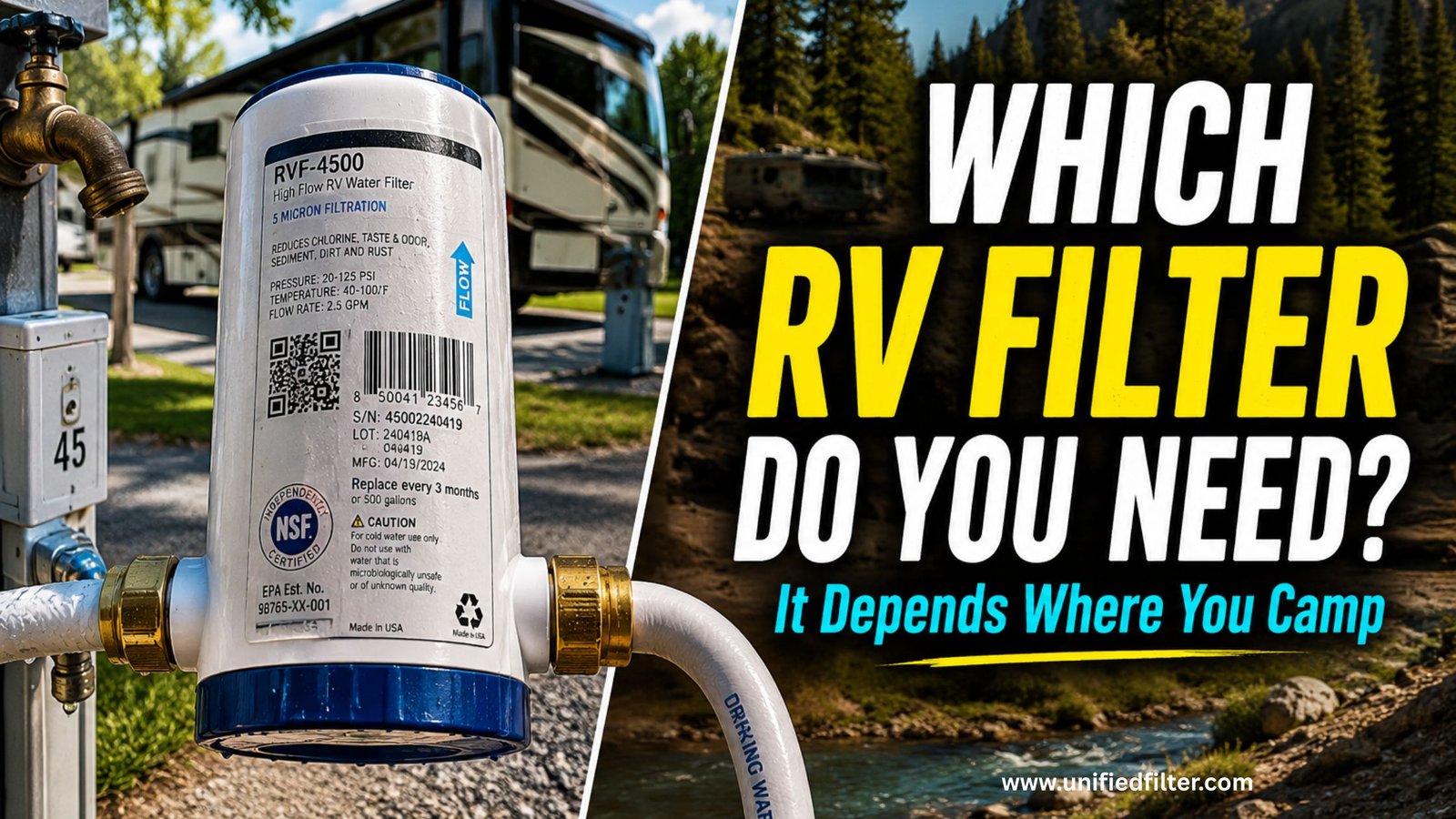

For weekend camping at established RV parks with city water hookups, a basic inline GAC/KDF filter like the Camco TastePure handles chlorine and sediment at $15-$40. For mixed or unknown water sources, a 0.5-micron carbon block inline or dual canister removes cysts and lead.
For boondocking or off-grid water, add UV sterilization. Most basic inline RV filters do not remove bacteria, this matters when the source is uncertain.Campground water is not consistent. One site delivers clean chlorinated city water indistinguishable from tap. The next pulls from a well that has not been tested in years.
The one after that has a notice on the spigot suggesting you boil before drinking. An RV water filter protects your health, improves taste, and shields your RV plumbing from sediment and scale but only if you match the filter to the water source you actually encounter.
Why Campground Water Quality Varies So Much
Unlike home tap water which is regulated by the EPA and reported in annual Consumer Confidence Reports campground water has no federal quality guarantee. RV parks that pull from municipal supplies deliver treated water similar to city tap. But quality still varies from park to park, and pipe age inside the campground matters.
The most common campground water problems
- Chlorine taste and smell: Heavy treatment at some municipal parks
- Sediment and rust: From aging campground plumbing infrastructure
- Sulfur odor: Groundwater sources near mineral deposits
- Cysts (Giardia, Cryptosporidium): Surface or poorly maintained well water
- Bacteria: Unregulated private sources, post-storm contamination
- Hard water: Scale buildup in water heaters and pipes over time
Your RV fresh water tank is also a contamination source. Tanks that sit unused for extended periods can develop biofilm. Sanitize your fresh water tank at the start of each season with a diluted bleach solution 1/4 cup per 15 gallons then flush thoroughly before use.
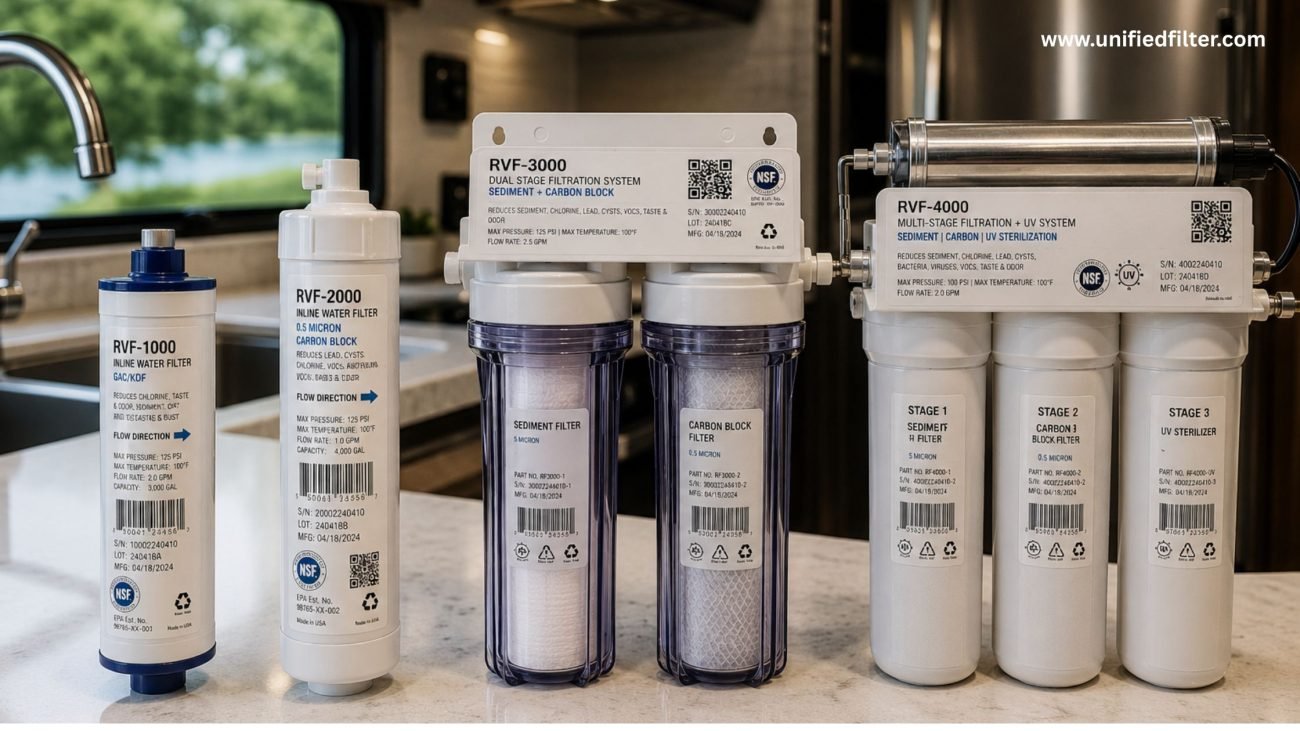
RV Water Filter Types | What Each One Does and Does Not Remove
Not all RV water filters are equal. The most popular option is the inline hose filter which is also the most limited. Here is the honest breakdown:
| Type | Removes | Bacteria? | Flow Rate | Best For | Price |
| Inline hose filter (GAC/KDF) | Chlorine, sediment, taste | No | 1-2 GPM | Weekend campers, city hookups | $15-$40 |
| Carbon block inline (0.5 micron) | Chlorine, lead, cysts, VOCs | Cysts only | 0.5-1 GPM | Families, cyst-risk areas | $30-$70 |
| Dual canister system | Sediment + chlorine + cysts | Cysts only | 2-4 GPM | Full-timers, all water types | $80-$200 |
| Canister + UV system | Sediment + chlorine + bacteria + viruses | Yes | 2-4 GPM | Boondockers, well water sources | $200-$500 |
| Under sink RO (in-rig) | Everything + dissolved solids | Yes | Slow tank storage | Full-timers, drinking water only | $300-$700 |
Most basic inline RV filters including the popular Camco TastePure do not remove bacteria or viruses. They are excellent for city water hookups but are not sufficient for unknown, well, or natural water sources. If you regularly camp off-grid or at sites with uncertain water you need a 0.5-micron or finer filter, and ideally UV sterilization.
Which RV Water Filter Is Right for Your Camping Style?
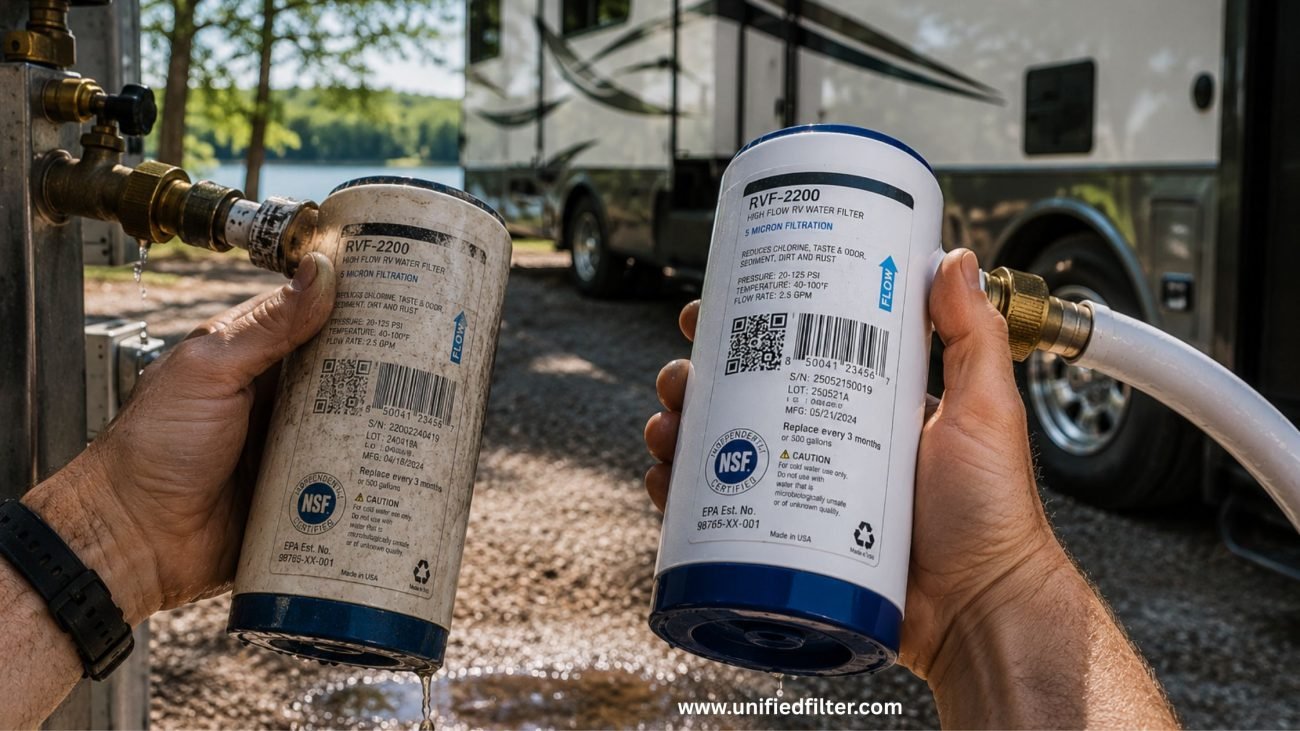
The right RV water filter depends on where you camp and how often.
| RV User Type | Water Sources | Best Filter Setup | Budget |
| Weekend camper, established parks | City water hookups treated | Single inline GAC/KDF filter | $15-$40 |
| Regular camper, mixed sites | City + occasional well or unknown | 0.5-micron carbon block inline | $30-$70 |
| Family camper, health conscious | Varies by trip | Dual canister (sediment + 0.5 carbon) | $80-$200 |
| Full-timer, all terrain | City, well, unknown all types | Dual canister + UV sterilizer | $200-$500 |
| Boondocker, off-grid | Unknown, natural, or well sources | Multi-stage + UV no exceptions | $300-$600 |
Best RV Water Filters
Certified options matched to specific camping scenarios.
| Product | Type | NSF Cert | Capacity | Best For |
| Camco TastePure (40043) | Inline GAC/KDF | NSF 42/53 | ~3 months | Best budget, weekend city hookups |
| FRIZZLIFE MV99 | 0.5 micron inline | NSF 42/53 | ~3-4 months | Cyst + lead protection at low cost |
| Camco EVO X2 | Dual stage KDF/carbon | NSF 42/53 | ~6 months | Mid-range, lead + cysts + chlorine |
| Clearsource Ultra | 3-stage canister + 0.2 micron | NSF 42/53 | Long season | Full-timers, bacteria + cyst protection |
| iSpring CW31 | 3-stage whole-rig | NSF 42/53 | Cartridge based | Class A/C motorhomes, all fixtures |
For most weekend RVers: The Camco TastePure is the most popular inline filter for good reason, affordable, effective for city water, easy to connect to any standard hose. For cyst and lead protection step up to the FRIZZLIFE MV99 (0.5 micron, NSF 53 certified) at roughly double the price.
For full-timers and boondockers: The Clearsource Ultra’s 0.2-micron hollow fiber membrane removes bacteria like E. coli and Legionella, the only inline-style RV system with this level of protection. The iSpring CW31 is the strongest whole-rig option for larger Class A motorhomes.
Flow Rate | The Spec Most RVers Overlook
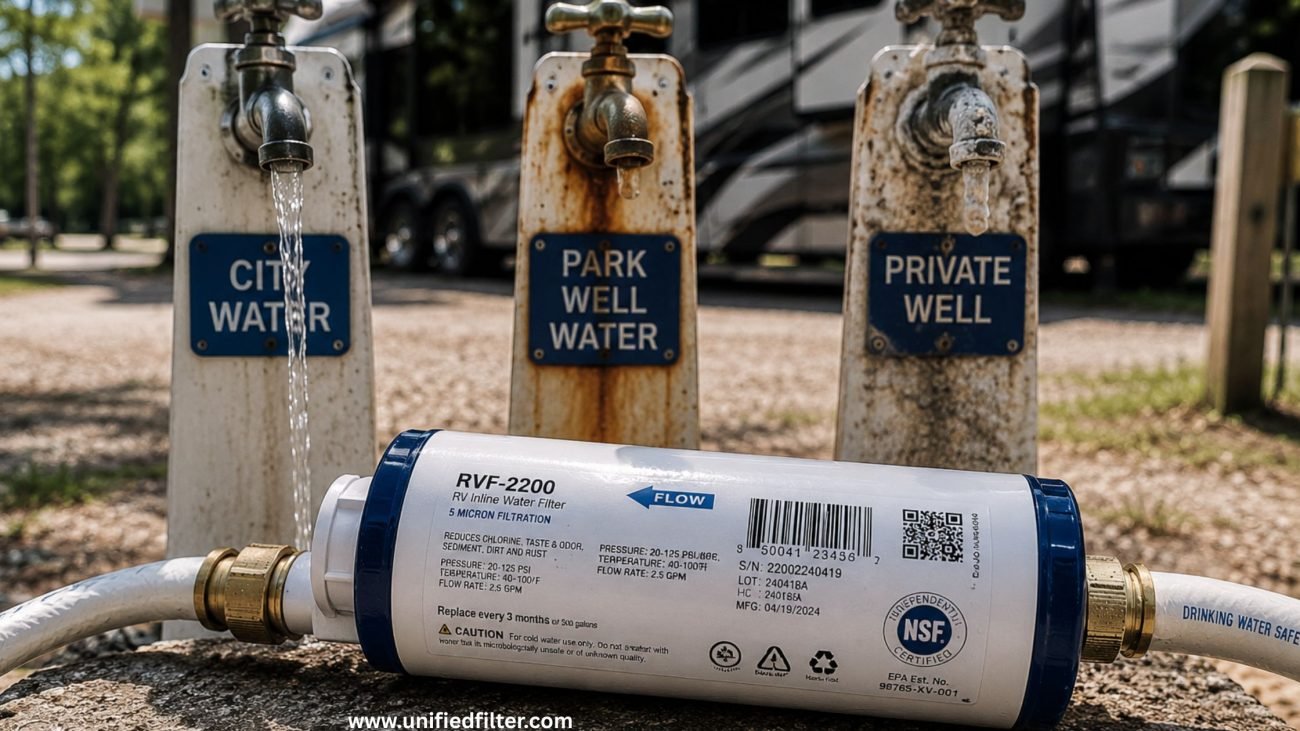
Flow rate determines whether your shower feels normal or like a trickle. Most basic inline RV filters flow at 1-2 GPM. High-flow canister systems reach 4 GPM. The tradeoff: finer filtration (0.5 micron and below) naturally reduces flow because water has to push through tighter pores.
Practical guidance
- Filling a fresh water tank from a spigot, flow rate barely matters, any filter works
- Running city water directly through the filter into your RV plumbing, you need at least 1.5-2 GPM to maintain comfortable shower pressure
- Whole-rig systems (canister setup), choose systems rated at 3-4 GPM for comfortable simultaneous use
The Clearsource Ultra and similar 0.2-micron systems are slower, typically 0.5-1 GPM. Most RVers use these to fill their fresh water tank, then draw from the tank through the RV pump, which is fine and avoids the flow rate limitation entirely.
Winterizing Your RV Water Filter | What Happens if You Skip It
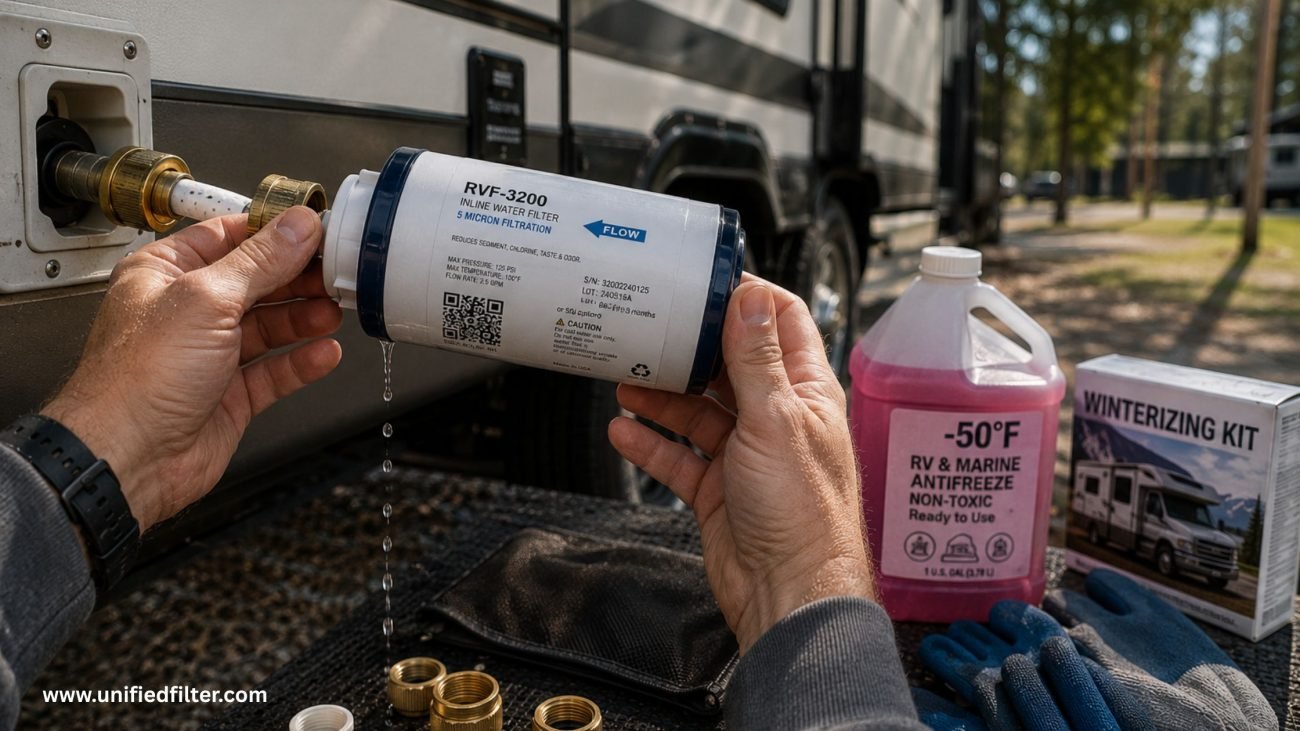
Carbon filters left wet over winter develop biofilm, bacteria and mold growing in the saturated filter media. A filter that looks intact in spring may be actively contaminating your water. Standard carbon does not inhibit bacterial growth on its own.
KDF media used in most quality inline filters, is bacteriostatic, meaning it inhibits bacterial growth within the filter during storage. This is one reason KDF/GAC combination filters outperform pure GAC for RV use; the protection continues when the rig is parked.
Winterization steps for your RV water filter
- Remove and discard the filter before winterizing, do not blow compressed air through a filter
- Store a new filter sealed in its original packaging for spring, filters lose some effectiveness when frozen
- Sanitize your fresh water tank and lines before installing the new filter in spring
- Run 2-3 minutes of water through the new filter before drinking
Where to Install an RV Water Filter | Outside vs Inside the Rig
Outside (at the hose connection): Most common placement. Inline filters connect between the campground spigot and your RV’s water inlet. This protects your entire plumbing system, tank, water heater, pump, and all fixtures. Downside, exposed to UV and temperature swings which can shorten filter life.
Inside (under sink or in-rig): A second filter stage mounted inside the RV at the kitchen sink for drinking water specifically. Common setup, basic inline outside for whole-rig protection, finer carbon block or RO inside for drinking water quality. Best approach for health-conscious travelers.
Both: The most comprehensive setup. Coarse sediment filter outside (20 micron) to protect plumbing + finer 0.5-micron carbon outside for whole-rig cyst/chlorine protection + under-sink carbon block or RO inside for drinking water. Overkill for casual campers, standard practice for full-timers.
Also Read: Activated Carbon Water Filter
Frequently Asked Questions
Do I need an RV water filter?
Yes, campground water quality varies significantly, and even treated city water contains chlorine, sediment, and sometimes lead from aging pipes.
Do RV water filters remove bacteria?
Most basic inline filters do not, you need a 0.5-micron or finer filter for cysts, and UV sterilization for bacteria and viruses.
How long does an RV water filter last?
Basic inline filters last 2-3 months of active use; dual canister systems last a full season (6 months); always discard and replace at the start of each camping season.
Can I use a regular water filter on my RV?
Standard under-sink or pitcher filters are not designed for RV hose connections, use filters specifically rated for RV use with standard garden hose fittings and appropriate flow rates.
What is the best RV water filter for boondocking?
A multi-stage canister system plus UV sterilizer, the Clearsource Ultra is the top-rated option for unknown water sources, removing bacteria and cysts.